By Peter Doe
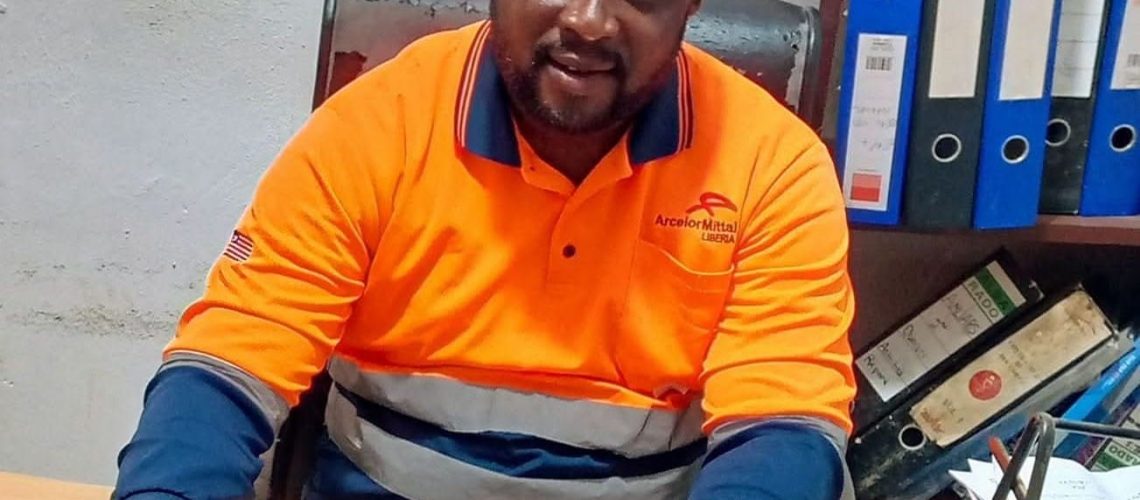
Monrovia – The ordeal of Joseph Yakai Kiadii, an environmental officer with ArcelorMittal Liberia, underscores the dangers faced by Liberians working for foreign concessions amid growing community frustrations over unaddressed grievances.
Kiadii was hired in 2022 to oversee operations at the Yekepa wastewater treatment plant in Nimba County, a role that placed him at the centre of one of the company’s most sensitive responsibilities—managing the discharge of waste and effluents into local water sources. As complaints about spillages and untreated wastewater grew, residents increasingly held him accountable, while his proposals for reforms reportedly went unanswered by management.
On September 24, 2022, Kiadii was ambushed in Ganta by men he claimed were former fighters loyal to ex-general Adolphus Dolo. They accused him of failing to safeguard the community’s environment, leaving him with deep wounds to his hand, lasting eye damage, and a badly sprained leg. What followed was a string of threats, including late-night calls urging him to pressure his foreign bosses to “do right by the people.” By May 2024, the intimidation escalated when six armed men stormed his Yekepa home, vowing to kill him. He and his family were away at the time, but the incident left them shaken.
Despite repeated reports to both his supervisors and the local police, no arrests were made. A senior officer in Nimba County admitted that although the complaints were documented, the case was complicated by the involvement of ex-combatants and tensions between the company and the community. ArcelorMittal Liberia did not respond to requests for comment.
Residents in Yekepa confirmed long-standing anger over poor waste management, saying untreated wastewater had seeped into creeks and threatened their health and livelihoods. Many admitted they directed their frustrations at Kiadii because foreign managers rarely engaged them. Some of his colleagues, however, defended him as a diligent worker caught between a multinational corporation and a restive community, insisting that his recommendations for better practices were often ignored.
Kiadii’s experience is part of a broader pattern of tension between concession companies and host communities in Liberia. From rubber plantations in Firestone to palm oil concessions in Sinoe, residents have repeatedly accused foreign firms of neglecting their welfare while exploiting local resources. Analysts argue that weak concession monitoring and government prioritisation of investment over accountability have left communities disillusioned and workers like Kiadii vulnerable.
Now living in fear, Kiadii says the ordeal has left his family traumatised. His story highlights a wider problem: while multinational corporations extract Liberia’s resources, ordinary Liberians in mid-level roles face the direct anger of communities when promises go unmet, often without protection from employers or the state. As Liberia continues to depend on concessions to fuel its economy, questions remain about who should be held accountable when corporate commitments are ignored and how many more workers will be marked for death before the balance between foreign profit and local survival is addressed.